


"Former Rental" Title Brand Explained: What It Means for Car Buyers

- "Former Rental" Title Brand Explained: What It Means for Car Buyers
- What Is a Former Rental Title Brand?
- How Does a Vehicle Get a Former Rental Title Brand?
- How States Handle the "Former Rental" Title Brand
- Sub-Types / Related Title Brands
- Who Assigns the Former Rental Title Brand & Where It's Recorded
- Impact of a Former Rental Title Brand
- Should You Buy a Former Rental Vehicle?
- FAQs About Former Rental Title Brand
- FREE Vehicle Search
There's more to a car's history than mileage and condition; sometimes a title brand is involved. It's a designation that provides crucial information about a car's condition and usage history. "Salvage" and "Rebuilt" are among the better-known title brands because these vehicles often enter the used-car market. You might come across others such as "Fire Damage" or "Vandalism".
Among the dozens of classifications is the "Former Rental" Title Brand. As the name implies, this refers to a vehicle that a rental company once owned. It's one of several disclosure-based designations, such as "Prior Taxi" or "Prior Police", that provide insights into how the car was used.
What Is a Former Rental Title Brand?
The Former Rental Title Brand is printed on a title certificate or entered into an electronic record when a DMV determines that the vehicle was registered to a rental car company. However, not all states recognize this title brand. This designation doesn't indicate any damage, such as an accident or flooding, although rental cars are certainly susceptible to such incidents. It's an ownership marker that informs consumers how the vehicle was used.
Being alert to this background is essential, considering that these fleets see considerably more use. A 2024 report from Auto Rental News reveals that the average rental car is two to three years old with 40,000 to 70,000 miles before being "de-fleeted". In contrast, the average U.S. driver is behind the wheel for about 13,500 miles annually, according to the Federal Highway Administration.
How Does a Vehicle Get a Former Rental Title Brand?
Auto Rental News estimates that there were more than 2.2 million rental cars in the U.S. in 2023, with Enterprise (which also owns Alamo and National) accounting for 1.3 million of them. Considering these automobiles are replaced every two to three years, that's a lot of rentals sold through auction, dealer, and direct-to-consumer channels. Each transaction triggers a title transfer.
In states that recognize the Former Rental Title Brand, the motor vehicle agency adds this designation when issuing a new title to a retail buyer. In addition to the Former Rental label, the title may be marked with "Prior Rental" or "Rental Use Vehicle". While the terminology may vary, the meaning is consistent: this automobile was once part of a rental fleet.
This title brand remains on the vehicle's permanent record, even if the reissuing DMV doesn't print the designation on the certificate. The notation is tracked in the National Motor Vehicle Title Information System (NMVTIS), a federal database. Although the classification may not be visible in printed documents, a GoodCar vehicle history report will show the details.
How States Handle the "Former Rental" Title Brand
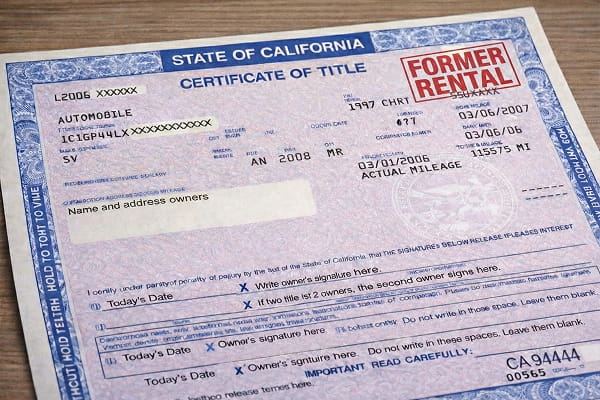
While NMVTIS recognizes Brand Code 48 ("Former Rental"), individual states determine how to handle the designation. Some DMVs may print the notation on a title or maintain it in electronic records that are submitted to NMVTIS. Others may only recognize the classification when carrying forward a previous title brand during retitling. Here's a look at how select states either originate or preserve the brand when transferring a title.
State |
How the Brand Is Handled |
|---|---|
Florida |
Recognizes NMVTIS Brand Code 48 and carries forward any existing "Former Rental" notation when issuing a new title. |
North Carolina |
Requires that the previous title's brand be carried forward on the new North Carolina Certificate of Title. |
Ohio |
Includes notations or brands consistent with another state's title law, ensuring prior brands appear on new Ohio titles. |
Oklahoma |
Issues a "Rental Title" for vehicles purchased by rental companies; this status appears on the title and in registration records. |
Pennsylvania |
Carries forward brands from surrendered out-of-state titles under the MV-426B reconstructed/branded title workflow. |
South Dakota |
Displays all out-of-state brands on South Dakota titles, including "Former Rental", under its previous-state field. |
Texas |
Directs staff to carry forward all NMVTIS-recognized brands, including "Former Rental", when reissuing Texas titles. |
Virginia |
Carries forward any title brand issued by another state. |
Washington |
Historically applied "Former Rental" as a non-standard brand; state law requires it be retained on titles if previously issued. |
Wisconsin |
Carries forward all out-of-state title brands recognized by NMVTIS, though it doesn't originate a Former Rental Title Brand. |
Some states, such as Oregon and Nebraska, explicitly note that a Former Rental Title Brand won't be applied. However, because of NMVTIS participation, this title history will still appear in a VIN check if the vehicle was previously branded in another state. In other words, a vehicle history report with NMVTIS-supplied data will show a Former Rental Title Brand even if a newer title does not.
Sub-Types / Related Title Brands
Rental cars aren't the only fleet vehicles with a unique title brand. Other designations identify automobiles previously used for business or public service. However, not every type of commercial use has a corresponding title brand.
-
Fleet/Commercial Use: Most states handle fleet or commercial status as a registration category, not a title brand. This category identifies vehicles purchased or leased by a business or public agency. These records may transfer to NMVTIS as ownership or use history, but don't usually appear as a title brand. Fleet vehicles often have high mileage, as do rental cars.
-
Former Taxi: NMVTIS administers two title brands covering former taxis: "Prior Taxi" (Code 17) and "Original Taxi" (Code 19). These designations identify vehicles previously operated as licensed taxicabs or for-hire automobiles. State title brand terminology may include Former Taxi, Prior Taxi, or Taxicab. Taxis are often ultra-high-mileage vehicles with accelerated wear on components and the interior.
-
Former Police: Under NMVTIS, previous police vehicles are assigned to two title brands: "Prior Police" (Code 18) and "Original Police" (Code 20). These classifications indicate cars that have been retired from law enforcement use. Various title brand labels may be used, depending on the state, including Former Police, Prior Police Vehicle, or Police. These vehicles undergo heavy use, often with extended idling periods, and have duty-specific hardware or wiring modifications.
Who Assigns the Former Rental Title Brand & Where It's Recorded
The Former Rental Title Brand is applied by a state motor vehicle agency when vehicle ownership transfers from the rental company. Depending on the state, the brand appears on:
-
The printed certificate of title (where applicable)
-
The state's electronic title record
-
The vehicle's NMVTIS entry, accessible by history-report providers like GoodCar
As noted earlier, not every state applies this title brand. However, when it does appear, the information becomes a permanent part of the vehicle's NMVTIS record. In addition, the notation doesn't go away even if the car is later sold across state lines.
Impact of a Former Rental Title Brand
The effect of a Former Rental Title Brand varies by vehicle; condition, mileage, and maintenance history matter far more than the label itself.
-
Resale Value: Generally, a car with a usage-based title brand will sell for less than a clean-title equivalent. However, it's less definitive with a rental car, because these vehicles tend to be newer. In addition, most major rental companies sell their fleet vehicles with a warranty. This coverage can make these cars especially appealing over a rental purchased elsewhere.
-
Insurance: A Former Rental Title Brand isn't usually a barrier to obtaining insurance coverage, assuming there are no underlying issues (such as a previous rental vehicle later acquiring a Salvage or Rebuilt Title Brand).
-
Financing: Based on a Former Rental Title Brand being the only negative mark in a vehicle's history, most lenders will treat a previous rental car similarly to a regular used vehicle.
-
Perception: There are two schools of thought when it comes to purchasing an ex-rental car. Some consumers believe hard use by uncaring renters makes used cars unsuitable, while other shoppers like the idea of buying a regularly maintained vehicle at a reasonable price. The validity of these beliefs depends on the individual car under consideration, as either could be true.
Should You Buy a Former Rental Vehicle?

There's much to consider if there's a previous rental car on your shopping list. Here's a breakdown of benefits and drawbacks:
Pros
-
There is a possibility of a lower price compared to that of a comparable clean-title counterpart.
-
Larger rental companies tend to follow manufacturer maintenance schedules.
-
It's possible to find newer models with modern safety and technology features.
Cons
-
Mileage accumulations are often two to three times above normal.
-
Increased wear on mechanical systems and interior components due to multiple drivers and high mileage.
-
Uncertainty about how renters may have treated the car.
It's crucial to remember that some former rental cars are better than others. Assuming that all ex-rental vehicles are the same could be a big mistake. You'll need to dive into the supporting documentation and the car's condition. Ideally, you'll have access to detailed service records. Otherwise, you're just buying a used car with all its inherent risks.
In addition, pay close attention to the vehicle's condition. Does the exterior have dings or paint scratches? What's the interior like? Assess the wear and tear on the steering wheel, upholstery, carpeting, and door armrests. Follow up your initial review with a detailed vehicle history report from an NMVTIS-approved provider, such as GoodCar, and a comprehensive pre-purchase inspection from a trusted mechanic.
Buyer Checklist:
Take a few simple steps to ensure a former rental car is in good condition and really worth the price.
-
Compare Prices: Check what comparable vehicles without a Former Rental Title Brand are selling for.
-
Review Warranty Coverage: Determine if there's any existing factory warranty protection or coverage provided by the seller.
-
Run a VIN Report: Order a vehicle history report from GoodCar to verify the car's title status and make sure there's no negative background information (such as accidents or other title brands).
-
Request Maintenance Records: If available, examine service history documentation.
-
Confirm Insurance: Verify your insurance options and premium costs.
-
Schedule a Pre-Purchase Inspection: Have an experienced technician examine the car for excessive wear and potential trouble spots. The vehicle's service history should also be reviewed.
FAQs About Former Rental Title Brand
The information in this article is intended to help you understand how the Former Rental Title Brand works. Since title branding laws vary by state, check with your local motor vehicle agency for the most up-to-date guidance before making a purchase.
- "Former Rental" Title Brand Explained: What It Means for Car Buyers
- What Is a Former Rental Title Brand?
- How Does a Vehicle Get a Former Rental Title Brand?
- How States Handle the "Former Rental" Title Brand
- Sub-Types / Related Title Brands
- Who Assigns the Former Rental Title Brand & Where It's Recorded
- Impact of a Former Rental Title Brand
- Should You Buy a Former Rental Vehicle?
- FAQs About Former Rental Title Brand
- FREE Vehicle Search
FREE Vehicle Search
- Accidents
- Problem Checks
- Title Records
- Recalls
- Values
- Specs


-
 InfoPay, Inc. (dba GoodCar) is an Approved NMVTIS Data Provider
-

-
