


"Collision" Title Brand: What It Means for Buyers and Sellers
- "Collision" Title Brand: What It Means for Buyers and Sellers
- What Is a "Collision" Title Brand?
- How Does a Vehicle Get a "Collision" Title Brand?
- How States Handle the "Collision" Title Brand
- Sub-Types / Related Title Brands
- How the "Collision" Title Brand Is Recorded
- Impact of a "Collision" Title Brand
- Should You Buy a "Collision" Title Vehicle?
- FAQs About the "Collision" Title Brand
- FREE Vehicle Search
A car's title is more than proof of ownership; it can also be a record of its condition. Vehicles that have received significant damage in an accident or due to a natural disaster can be marked with a title brand that permanently documents the occurrence. There may be other reasons why a car is classified this way, such as for commercial use or after theft recovery. These designations exist to alert future owners to important details in the vehicle's history that often affect its value and ability to be driven on public roads.
While the "Collision" Title Brand is seldom used as a stand-alone designation, some states do record this information. The details may also be stored electronically and appear in a comprehensive vehicle history report based on a vehicle identification number (VIN). This particular title brand is recognized by the National Motor Vehicle Title Information System (NMVTIS) as Brand Code 14. While the Collision Title Brand is less common, it's something car owners and buyers should be aware of.
What Is a "Collision" Title Brand?
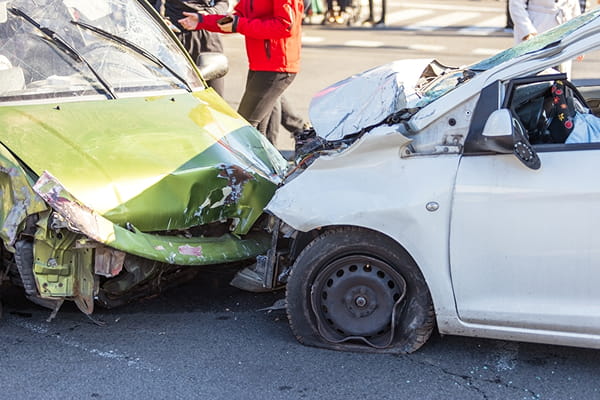
With about six million police-reported motor vehicle accidents occurring each year, according to the National Highway Traffic Safety Administration (NHTSA), collisions are unfortunately part of the car ownership experience for many. To make matters worse, over 25% of these incidents result in the damaged car being declared a total loss by an insurance company.
This is when a "Salvage" Title Brand is usually issued. However, it's a more generic classification that may not fully disclose the cause of the loss. Meanwhile, the Collision notation specifies how the damage occurred, such as through a highway crash, multi-car pile-up, or single-vehicle incident. This clarification provides valuable transparency, helping distinguish Salvage Title vehicles with an accident-related history from those damaged by floods, fires, hail, vandalism, or theft.
Why does this matter? Because some Salvage Title cars may get "Rebuilt" or "Reconstructed" Titles after being repaired and passing safety and roadworthiness inspections. These vehicles may then become available for sale on the used car market. Importantly, the Collision Title Brand history can still be traced through NMVTIS-supplied data, even if a Rebuilt or Reconstructed title is issued. Knowing this background ensures you're paying a fair price.
How Does a Vehicle Get a "Collision" Title Brand?
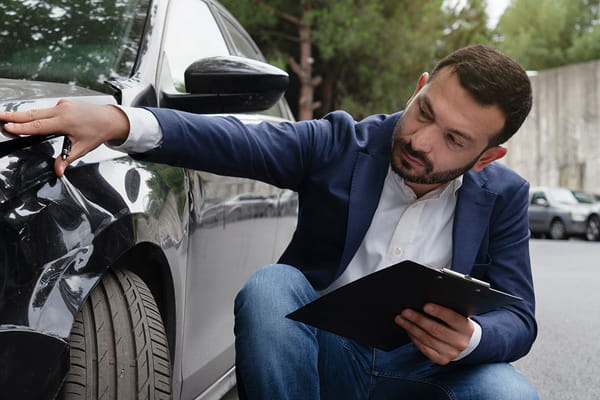
The Collision Title Brand (or a similar designation) is applied after an insurance company and the applicable state motor vehicle agency follow specific steps. The process involves several steps rather than a single action.
-
Crash and Assessment: Following a significant accident, an insurance adjuster determines if the cost of repairs exceeds a total-loss threshold. This benchmark, often 70-80% of the vehicle's pre-crash cash value, determines if the car is repaired or declared a total loss. The total-loss threshold is mandated by state law, but varies by jurisdiction.
-
Total-Loss Declaration: If a total loss is declared, the insurer pays the insured (or their lender) and takes ownership of the vehicle.
-
Title Submission: The insurance company applies for a branded title so the car can't be later sold as undamaged. The application, along with documentation, is submitted to the DMV. Depending on the state, the damage reason may be listed as NMVTIS Brand Code 14: Collision.
-
Branding and Record Update: The DMV issues a new title certificate with the branding. Some states may print Salvage on the title, while recording Collision as an internal notation or secondary brand in NMVTIS.
-
Inspection and Re-titling: While not every car with a Collision Title Brand will get rebuilt, some are restored. In these instances, the vehicle has to pass a state inspection before a Rebuilt or Reconstructed Title can be issued. When this occurs, the brand history remains in VIN-based reports.
Importantly, each state maintains its own standards for loss thresholds and reporting requirements, which is why brand labels are inconsistent across jurisdictions.
How States Handle the "Collision" Title Brand
As discussed earlier, most states don't use the Collision Title Brand on vehicle titles. Instead, motor vehicle agencies may report the reason for the damage to NMVTIS, a federal database that tracks VIN-based automobile history. Massachusetts uniquely requires a second "reason for salvage", such as Collision, to be entered in its records. Here's an overview of different state practices.
State |
Title Wording |
How Collision Damage Is Recorded |
|---|---|---|
Massachusetts |
Salvage/Owner-Retained with secondary brand |
State requires a "reason for salvage" sub-brand (e.g., Collision, Fire, Flood, Theft, Salt). Appears on the title and in NMVTIS. |
Wisconsin |
Claim Paid |
Applies when a vehicle is "damaged by collision or other occurrence" and an insurer pays a loss; distinct from Salvage branding. |
Mississippi |
Damage History/Flood/Hail |
Rules list "collision damage" as a trigger for branding, but titles show only "Damage History". |
Arkansas |
Damaged/Previous Damage |
Printed brand appears when a vehicle suffers major damage (including collision) but is not non-repairable. |
North Dakota |
Previously Damaged |
Title notes that the vehicle was "previously damaged" from a collision or other event, distinct from Salvage. |
All Other States |
Salvage/Rebuilt/ |
No separate Collision designation; damage type recorded only in NMVTIS under Code 14, depending on the jurisdiction. |
What This Means for Buyers
The reality of a Collision Title Brand is that it rarely appears on a printed title certificate. You're more likely to come across a Salvage, Rebuilt, or similar designation. Nonetheless, the Collision classification may still be shared electronically with state DMVs. This underscores the importance of getting a vehicle history report through an NMVTIS-approved provider like GoodCar.
Sub-Types / Related Title Brands
Overlapping damage-related classifications can be confusing, but there are distinct differences in these title brands. Here's a quick breakdown that can help explain what you might see on a title or in a vehicle history report.
-
Collision: Applied due to accident or crash damage connected to a total-loss insurance claim.
-
Salvage: A broader title brand also associated with a total-loss event that can include collisions, floods, fires, or other incidents. This is the most common damage-related title brand; individual state DMVs may then provide specific causes through NMVTIS brand codes.
-
Rebuilt/Reconstructed: A vehicle branded as Collision or Salvage may receive a Rebuilt or Reconstructed title after being repaired, inspected, and cleared for driving on public roads.
-
Totaled: While a generic insurance term for a damaged vehicle whose repair costs exceed its value threshold, Totaled is also an official NMVTIS designation (Brand Code 31). Like Collision, Totaled doesn't usually appear on a printed title certificate; the classification may be translated into another brand, such as Salvage.
How the "Collision" Title Brand Is Recorded
After an accident results in a total loss, the car's status is sent to multiple locations, creating a traceable data trail.
-
Insurance Companies: Insurers are required to report a total loss to NMVTIS and to send documentation to the state motor vehicle agency for branding and retitling.
-
State DMVs: The branding is entered into the state DMV database, followed by a new title certificate, usually labeled Salvage or Owner-Retained. A total-loss vehicle that's been repaired and passed inspection may be rebranded as Rebuilt. Depending on the state, the cause of the damage may be reported as Collision.
-
Vehicle History Databases: Vehicle history providers like GoodCar collect NMVTIS and DMV data to provide reports with Collision and related information, even if the brand is printed on the title.
Multiple systems ensure accident-related branding is visible to buyers, regardless of what's printed on the title certificate.
Impact of a "Collision" Title Brand
A branded title usually hurts a car's marketability. Collision Title Branding is no different. This designation, whether direct or inferred, carries financial and day-to-day consequences.
Resale Value
The National Association of Insurance Commissioners reports that any type of accident history can reduce a vehicle's market value by 10-20%. According to Kelley Blue Book, those numbers double if a title brand is involved. Simply put, a vehicle with a Collision Title Brand or similar designation, no matter how expertly repaired, will be worth less than a clean-title equivalent.
Financing
Title-brand vehicles are turn-offs to lenders due to the risk involved; resale values are more difficult to determine, and there may be doubt about their longevity. As a result, securing financing may be difficult, with options potentially limited to shorter-term or higher-interest-rate loans.
Insurance
Insurers may be equally hesitant to provide coverage for a car with a Collision or other title brand. These non-standard vehicles are harder to classify, making off-the-shelf insurance options scarce. You may have to settle for a liability-only policy; comprehensive and collision coverage may be unavailable. Always check that you can secure insurance before purchasing a car with a title brand.
Registration and Inspection
Putting a Collision Title Brand vehicle back on the road involves jumping through a few hoops. Repairs must be performed to bring the car back to factory specifications and safe operating condition. Next, the state will require a comprehensive inspection to verify the work. If the vehicle passes, a title with a Rebuilt Title Brand or equivalent is issued. Along the way, all title brands remain in NMVTIS.
Should You Buy a "Collision" Title Vehicle?
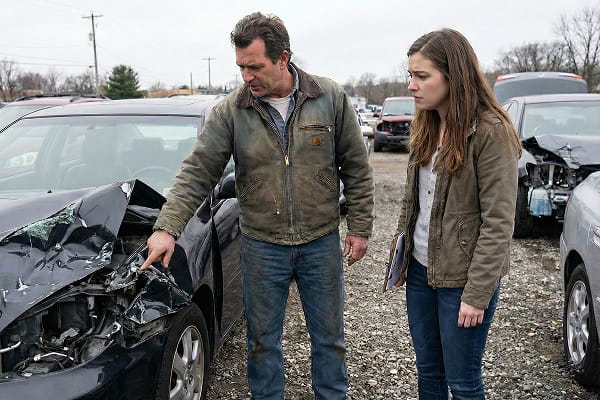
Purchasing a car with an accident history requires careful consideration. What appears to be a deal could turn into a headache. In contrast, you could find a bargain on a vehicle with quality repairs.
Pros
-
The biggest draw of a branded-title car is its lower purchase price compared to a clean-title counterpart.
-
Under the right circumstances, repairs can bring the car back to factory standards when the work involves OEM parts and professional-level shops.
-
Unrepaired cars with collision-related damage can have excellent parts value.
Cons
-
Repairs that look flawless could mask hidden damage.
-
Obtaining insurance and financing for a collision-damaged car can be difficult or more expensive.
-
Some buyers will avoid vehicles with a branded title, making resale more challenging.
Buyer Checklist
Jumping into buying a car with a Collision Title Brand or similar classification without doing your homework can be a mistake. Here are the actions to take before handing over any money.
-
Assess Pricing: Compare the cost of the car you want with and without an accident and title brand history; determine if the savings are worthwhile.
-
Run a VIN Report: Verify the car's background to confirm if the damage was collision-related and confirm any resulting changes to the title.
-
Review Repair Invoices and Photos: Ideally, the seller will have comprehensive records about the restoration process. Review the details with a trusted mechanic.
-
Confirm Insurance and Financing Availability: Check that you can obtain insurance for the car and confirm the cost. If financing is needed, do the same for a loan.
-
Get a Professional Inspection: Hire an experienced mechanic to inspect the car's operating and safety condition. You may also want to bring in a body shop expert to check for potential structural issues and hidden damage.
FAQs About the "Collision" Title Brand
This article explains how the Collision Title Brand is defined and used across different states. Because branding rules and reporting practices aren't uniform nationwide, always confirm the latest requirements with the appropriate DMV before buying or registering a vehicle.
- "Collision" Title Brand: What It Means for Buyers and Sellers
- What Is a "Collision" Title Brand?
- How Does a Vehicle Get a "Collision" Title Brand?
- How States Handle the "Collision" Title Brand
- Sub-Types / Related Title Brands
- How the "Collision" Title Brand Is Recorded
- Impact of a "Collision" Title Brand
- Should You Buy a "Collision" Title Vehicle?
- FAQs About the "Collision" Title Brand
- FREE Vehicle Search
FREE Vehicle Search
- Accidents
- Problem Checks
- Title Records
- Recalls
- Values
- Specs


-
 InfoPay, Inc. (dba GoodCar) is an Approved NMVTIS Data Provider
-

-
