


"Antique Vehicles" Title Brand, What It Means for Buyers and Sellers
- "Antique Vehicles" Title Brand, What It Means for Buyers and Sellers
- What Is the "Antique" Title Brand?
- Age and Condition Requirements for "Antique" Title Status
- How "Antique" Titles Differ from Classic or Historic Titles
- Benefits of an "Antique" Title Brand
- Restrictions That Come With an "Antique" Title
- How States Handle the "Antique" Title Brand
- How to Get a Title for an Antique Car
- Buying a Vehicle With an "Antique" Title Brand
- FAQs About the "Antique Vehicles" Title Brand
- FREE Vehicle Search
While automobiles were present on U.S. roads in the very early 1900s, they didn't gain widespread popularity until about a century ago. States started introducing titling laws around this time to prevent fraud as used car markets expanded.
In the 1990s, the federal government launched the National Motor Vehicle Title Information System (NMVTIS) to provide more consistent, permanent titling information to consumers and the broader automotive industry. Part of this effort included better tracking for title brands that could disappear when a vehicle was retitled in a different state. Title brands, which are permanent designations about a car's damage history, usage background, or significant status, can no longer be legally erased.
Most title brands, such as "Salvage" or "Flood", warn buyers about past damage, but the Antique Title Brand is very different. This classification marks a vehicle that has survived the test of time and is treated differently by DMVs. In fact, the Antique notation is one of the few title brands that may actually increase a vehicle's value.
What Is the "Antique" Title Brand?
The Antique Title Brand is an age-based classification used by some states to identify older vehicles that hold historical or collectible interest. This designation reflects longevity, preservation, and hobbyist use, not condition, damage history, or ownership background like many other title brands.
Significantly, the use of the Antique label varies by state. Some DMVs print the brand directly on the title certificate, while others may use a variation of the term. Certain states may recognize NMVTIS Brand Code 24 (Antique), but only for classification or preservation (to keep a record of the title brand) purposes. State-specific information is covered later.
Not every old car automatically qualifies for Antique status. Most states have an application process that includes an eligibility check to prevent misuse of the category.
Age and Condition Requirements for "Antique" Title Status
The key factor in determining Antique status is age, but the definition varies by jurisdiction. Under NMVTIS Brand Code 24, the threshold is 50 years, but the classification applies after 25 years in some states. Kansas, for example, sets the bar at 35 years.
Condition is another contributor. Some states require Antique-eligible vehicles to be substantially maintained in their original or restored condition. Maine, for example, excludes cars that have been heavily modified from their original specifications or factory appearance. Other states are less restrictive and more concerned that the vehicle is in a safe and drivable condition. Another common focus of many Antique Title Brand requirements is that these vehicles are treated as hobby cars and driven on a limited basis.
Age verification may depend on previous titles, older registration records, or manufacturer documentation. In some cases, the vehicle identification number (VIN) may be helpful, but the modern 17-character VIN didn't become law until 1981. Requirements could include providing photographs or an affidavit. A safety inspection could also be part of the process. More details on the titling process are covered below.
How "Antique" Titles Differ from Classic or Historic Titles
The terms "Antique" and "Classic" (and "Historic", too) may seem interchangeable, but each has a distinct meaning to state motor vehicle agencies. Generally, Antique applies to the oldest vehicles, while Classic and Historic apply to somewhat newer cars or ones used mainly for display purposes (car shows and parades). In short, a classic or historic vehicle isn't quite old enough to be considered an "Antique". However, because each DMV determines age qualification, a car could be classified as an Antique in one state but a Classic in another.
Adding to the potential confusion is the way these labels are used. Some states apply "Antique" as an actual title brand, while Classic and Historic categories are usually handled as registration classifications only. So, a title brand stays in the vehicle's VIN-based history, while registration details may not always be retained.
Benefits of an "Antique" Title Brand
Antique vehicles have wide appeal, especially among car enthusiasts and collectors. Some states promote this interest through owner-friendly policies.
Lower Fees
Some DMVs offer reduced registration and annual renewal fees for Antique vehicles compared to what's charged for standard passenger cars.
Special Plates
Most states offer unique license plates with Antique, Vintage, or Year-of-Manufacture phrasing that add authenticity and historical character. These plates attract other enthusiasts and can add to a vehicle's collectible value.
Inspection or Emissions Exemptions
Many states have mandatory safety or emissions inspections that are relaxed or eliminated for Antique vehicles because these cars are seldom used as daily drivers. Owners are still expected to keep these cars in safe operating condition on public roads.
Stronger Collector Appeal
A vehicle with an Antique Title Brand means that an owner has already jumped through regulatory hoops to obtain this classification, which can increase collector interest and long-term value.
Restrictions That Come With an "Antique" Title
Naturally, the advantages of an Antique Title Brand are offset by limitations, primarily related to driving.
Usage Restrictions
In many states, the privilege of an Antique Vehicle Title is subject to driving restrictions. Generally, these cars can be used for pleasure driving, travel to and from a repair shop, and participation in special events such as car shows. Daily commuting and commercial activity are usually not permitted.
Mileage Limits
Some DMVs may impose yearly mileage limits to ensure an Antique vehicle stays in the low-use category.
Penalties for Misuse
Owners of cars with an Antique Title Brand have a responsibility to comply with any conditions or restrictions to avoid fines or revocation of the vehicle's recognized Antique status.
How States Handle the "Antique" Title Brand
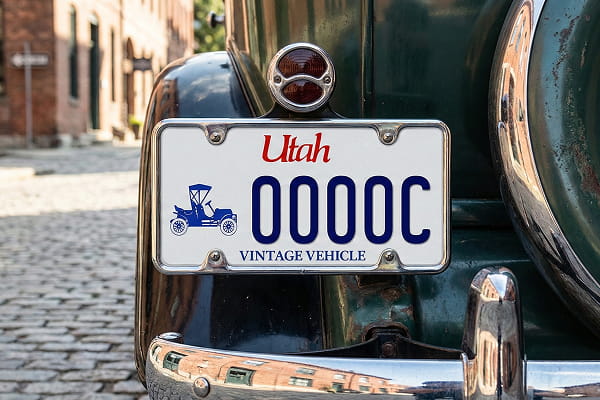
The underlying challenge with the Antique Title Brand is inconsistent use between states. A handful of DMVs directly apply the designation to title certificates; others use similar terminology that has the same effect. There's also a set of states that preserve the NMVTIS Brand Code 24 when transferring registration from another state, but don't initiate the brand. At the same time, other jurisdictions only offer Antique plates without any specialized title brand. Here's a look at how select states handle Antique vehicles.
States That Issue a True "Antique" Title Brand or Antique-Specific Title Certificate
State |
How the State Uses the "Antique" Title Brand |
What Makes It a True Title Brand |
|---|---|---|
Delaware |
Antique status requires a Delaware title and is tied to titled vehicles. |
Antique designation is linked to the title record, not just plates. |
Kansas |
State law requires qualifying titles to display "antique vehicle". |
Mandatory Antique wording printed directly on the title. |
Maine |
Issues a separate "Antique Auto/Motorcycle" title certificate type. |
Antique is a dedicated, formal title category. |
Nebraska |
Offers an "Antique Motor Vehicle Certificate of Title". |
Distinct title certificate specifically for antiques. |
New Hampshire |
Statute and rules allow a Certificate of Title for an Antique Motor Vehicle. |
Antique title is authorized in law and the administrative code. |
Pennsylvania |
Buyers may "brand the vehicle as an antique" during the title process. |
Antique label is applied as a title brand at issuance. |
States That Recognize or Report NMVTIS Brand Code 24 ("Antique")
State |
How the State Interacts With NMVTIS Antique Brand |
Notes |
|---|---|---|
Florida |
TL-59 includes "24 ANTIQUE - OVER 50 YEARS OLD" in its NMVTIS brand translation table. |
Florida preserves incoming NMVTIS Antique brands but does not originate them. |
Wyoming |
NMVTIS manual lists Brand Code 24 as "Antique - Vehicle is over 50 years old". |
Wyoming acknowledges NMVTIS Antique Brand Code 24 in its brand list. |
States With "Antique" Plates Only (NO Antique Title Brand)
State |
Why It Does NOT Count as a Title Brand |
Clarification |
|---|---|---|
North Carolina |
Antique vehicle is a plate/vehicle-type category; titles are processed normally. |
NC uses Antique for registration; titles don't carry an Antique brand. |
Virginia |
"Antique motor vehicle" is a usage/registration category, not a Title Brand. |
Title certificates do not include Antique wording. |
West Virginia |
Antique designation exists only for plates and registration. |
WV titles do not display Antique; the term governs plate use. |
How to Get a Title for an Antique Car
If you're wondering how to get a title for an antique car, each state has its own standards when applying for an Antique Title Brand. The process typically involves:
Application
The application requires the usual information (owner and vehicle details), but you're likely to need supporting documentation. Don't be surprised if there's a separate review process to confirm that the car qualifies for an Antique designation.
Age Verification
Be prepared to submit records that verify the car meets the state's qualifying age requirements. It might only take an old title or registration slip, but manufacturer records or other supporting documentation may be necessary. A vehicle history report based on NMVTIS data may also be helpful for certain vehicles. Usually, as part of the registration process, the DMV will outline what information is acceptable.
Inspection
Some states require Antique cars to pass a safety inspection. For example, Delaware requires a pre-registration inspection, and New Hampshire mandates a periodic inspection for Antique-registered vehicles.
Recordkeeping
An Antique Title Brand may help increase resale value. So retaining copies of application materials, validation documents, photographs, and other records can reassure buyers of the classification's legitimacy.
Buying a Vehicle With an "Antique" Title Brand

A vehicle with an Antique Title Brand or an antique car title requires extra scrutiny. After all, this is no ordinary used car. The brand may affect what you'll pay and how and where you can drive the vehicle. Be sure to consider these restrictions if you're a first-time buyer of an Antique car.
Confirming Title Information
The priority when buying any car with an Antique Title Brand is verifying its classification. If the title is from Delaware, Kansas, Maine, Nebraska, New Hampshire, or Pennsylvania, the brand should appear on the title certificate. Other states may carry forward the designation as an electronic record without printing the word ‘Antique' on the physical certificate. Order a title report from the applicable DMV and obtain a vehicle history report from an NMVTIS-approved provider like GoodCar to double-check the car's background.
Understanding Driving and Usage Limits
Recognize that Antique vehicles are not daily drivers. In many states, these vehicles are intended for limited use. Research the applicable restrictions before making a purchase.
Evaluating Condition and Authenticity
A pre-purchase inspection is always wise before buying any used car, but older vehicles require greater diligence and research. In addition to examining restoration documents, maintenance logs, photographs, and ownership records, be sure to hire an expert mechanic who's familiar with the nuances of Antique cars.
Insurance and Financing
Insurance is usually available for a roadworthy Antique car; you may just need to obtain a policy through a carrier that specializes in collector cars. Similarly, financing is available, but loan options may be limited to niche lenders.
Title Permanence
Keep in mind that once applied, an Antique Title Brand can't usually be reversed, it's a permanent designation.
FAQs About the "Antique Vehicles" Title Brand
- "Antique Vehicles" Title Brand, What It Means for Buyers and Sellers
- What Is the "Antique" Title Brand?
- Age and Condition Requirements for "Antique" Title Status
- How "Antique" Titles Differ from Classic or Historic Titles
- Benefits of an "Antique" Title Brand
- Restrictions That Come With an "Antique" Title
- How States Handle the "Antique" Title Brand
- How to Get a Title for an Antique Car
- Buying a Vehicle With an "Antique" Title Brand
- FAQs About the "Antique Vehicles" Title Brand
- FREE Vehicle Search
FREE Vehicle Search
- Accidents
- Problem Checks
- Title Records
- Recalls
- Values
- Specs


-
 InfoPay, Inc. (dba GoodCar) is an Approved NMVTIS Data Provider
-

-
